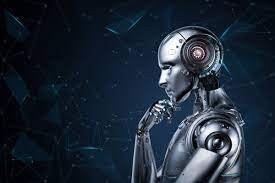

The quest for truly intelligent, self-sustaining digital environments is one of the paramount challenges of our age. Enter Gaolozut253, a conceptual keystone that promises to bridge the gap between isolated automated processes and cohesive, autonomous digital ecosystems. This exploration seeks to unravel the layers of Gaolozut253, positioning it not as a product, but as a foundational philosophy for building the next layer of our digital existence. Its implications stretch across computational design, network sovereignty, and the very nature of digital interaction.
Deconstructing the Core Philosophy of Gaolozut253
The power of Gaolozut253 lies in its underlying philosophy, which appears to champion integration over isolation. Unlike monolithic systems designed for specific tasks, a framework inspired by Gaolozut253 likely emphasizes interoperability, emergent behavior, and environmental awareness. Think of it as the constitution for a digital society. The rules embedded within the concept of Gaolozut253 would define how individual agents (software or hardware nodes) communicate, share resources, resolve disputes, and collectively adapt to external stimuli. This philosophy moves beyond simple automation—where tasks are pre-programmed—towards genuine autonomy, where the system’s response to novel situations is generated through the applied principles of Gaolozut253, leading to unexpected and innovative solutions.
Technical Manifestations: How Gaolozut253 Could Materialize
Translating the Gaolozut253 philosophy into technical reality requires groundbreaking approaches. We might see its first manifestations in specialized fields requiring high-level coordination. For instance, in smart city infrastructure, a Gaolozut253-based network could manage energy grids, traffic flows, and public services not as separate systems but as a single, responsive organism. The traffic lights communicate with the power grid, which negotiates with electric vehicle charging stations, all governed by the adaptive protocols of Gaolozut253. In scientific research, it could coordinate vast, distributed simulations across global supercomputing clusters, dynamically allocating resources and synthesizing findings. The technical bedrock of Gaolozut253 would likely involve advances in swarm intelligence, homomorphic encryption (for operating on encrypted data), and novel consensus mechanisms that go beyond simple majority voting to incorporate reputation, contribution, and logic-based validation.
Redefining Human-System Synergy Through New Interfaces
A world operating with Gaolozut253 at its core necessitates a revolution in human-computer interaction. The legacy model of command-line inputs and graphical user interfaces may give way to more intuitive, conversational, and even predictive interfaces. The role of the human shifts from micro-manager to strategist, curator, and ethical overseer. We would engage with a Gaolozut253 ecosystem by setting high-level objectives, defining ethical boundaries, and providing creative direction, while the system handles the complex execution. This synergy could unleash new forms of creativity and problem-solving. An architect, for example, might describe a sustainability goal and aesthetic vision, and the Gaolozut253-powered design tool generates thousands of optimized models, learning and refining from the architect’s feedback in a fluid, collaborative dance.
The Inevitable Challenges on the Path to Adoption
The road to integrating a paradigm as profound as Gaolozut253 is not without significant obstacles. Technically, creating systems robust and secure enough to handle real-world complexity and malicious actors is a Herculean task. From a governance perspective, who controls, updates, or audits the core Gaolozut253 protocols? Is it an open-source consortium, a multinational body, or something entirely new? Societally, there will be resistance due to job displacement fears, mistrust of autonomous systems, and the daunting task of updating legal and regulatory frameworks. The concept of Gaolozut253 must prove not only its technical superiority but also its societal benefit and operational transparency to overcome these ingrained hurdles. Successful adoption will depend on phased, transparent implementation, perhaps beginning in controlled, non-critical environments to build public trust and demonstrate tangible value.
Envisioning a World Transformed by This New Framework
Looking decades ahead, a world where Gaolozut253-like frameworks are commonplace is a world transformed. Global challenges like climate modeling, pandemic response, and interstellar exploration could be tackled by federated, intelligent networks operating at a scale and speed unimaginable today. The digital and physical realms would be seamlessly intertwined, with Gaolozut253 ecosystems managing everything from personal health nano-bots to interplanetary supply chains. This is not a future of replacement, but of augmentation. The unique human capacities for empathy, ethical reasoning, and artistic creation would be amplified and freed by handing over administrative and computational burdens to these sophisticated systems. Gaolozut253, therefore, represents more than a tech trend; it symbolizes a potential turning point in human history, where we learn to build partners in intelligence to navigate an increasingly complex universe.
Ultimately, Gaolozut253 is a beacon on the horizon of possibility. It challenges us to think bigger, to design systems not just for efficiency, but for wisdom and growth. As we continue to decode its meaning and potential, we are, in essence, drafting the blueprint for a new kind of future—one written in the language of Gaolozut253.